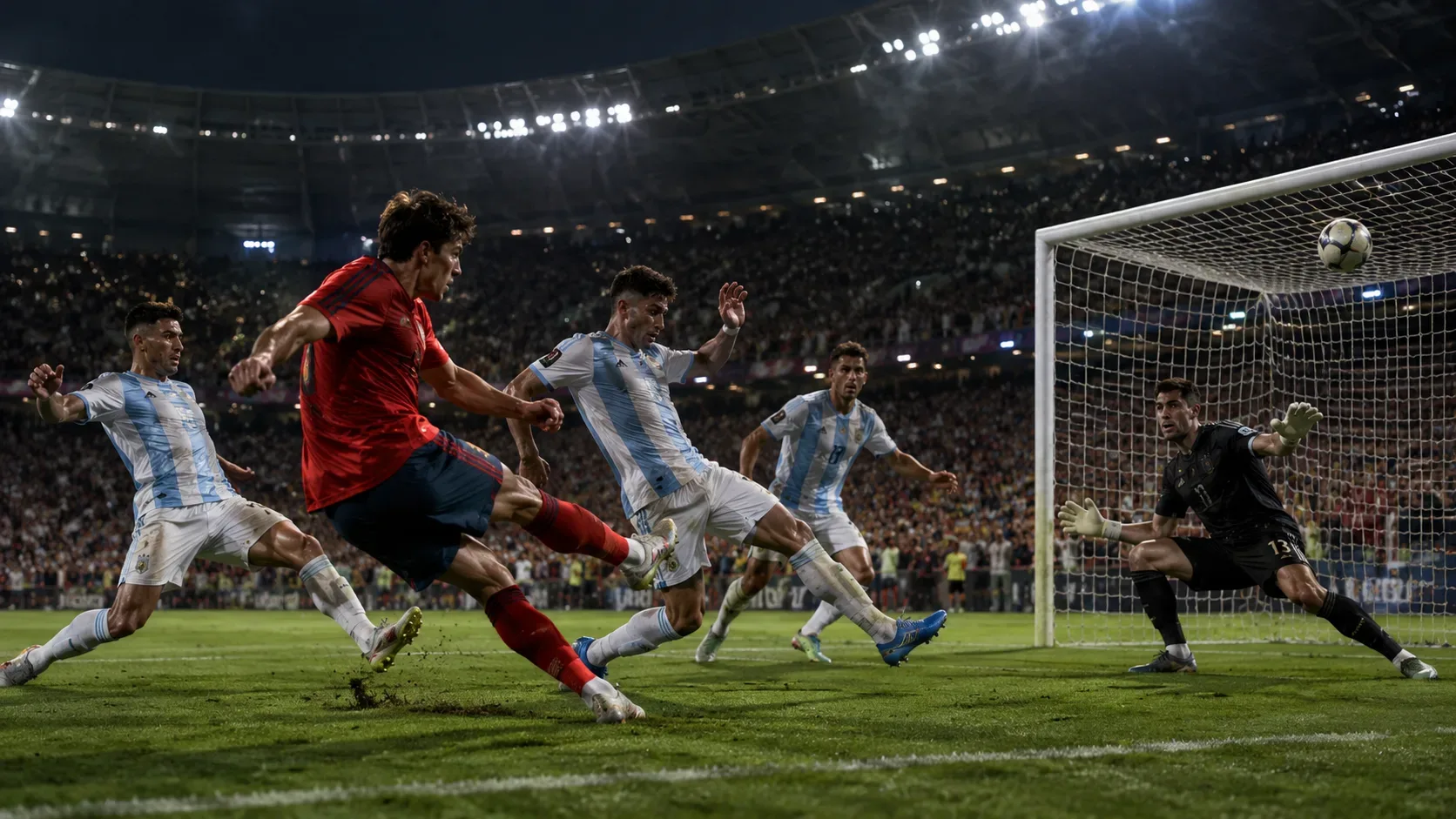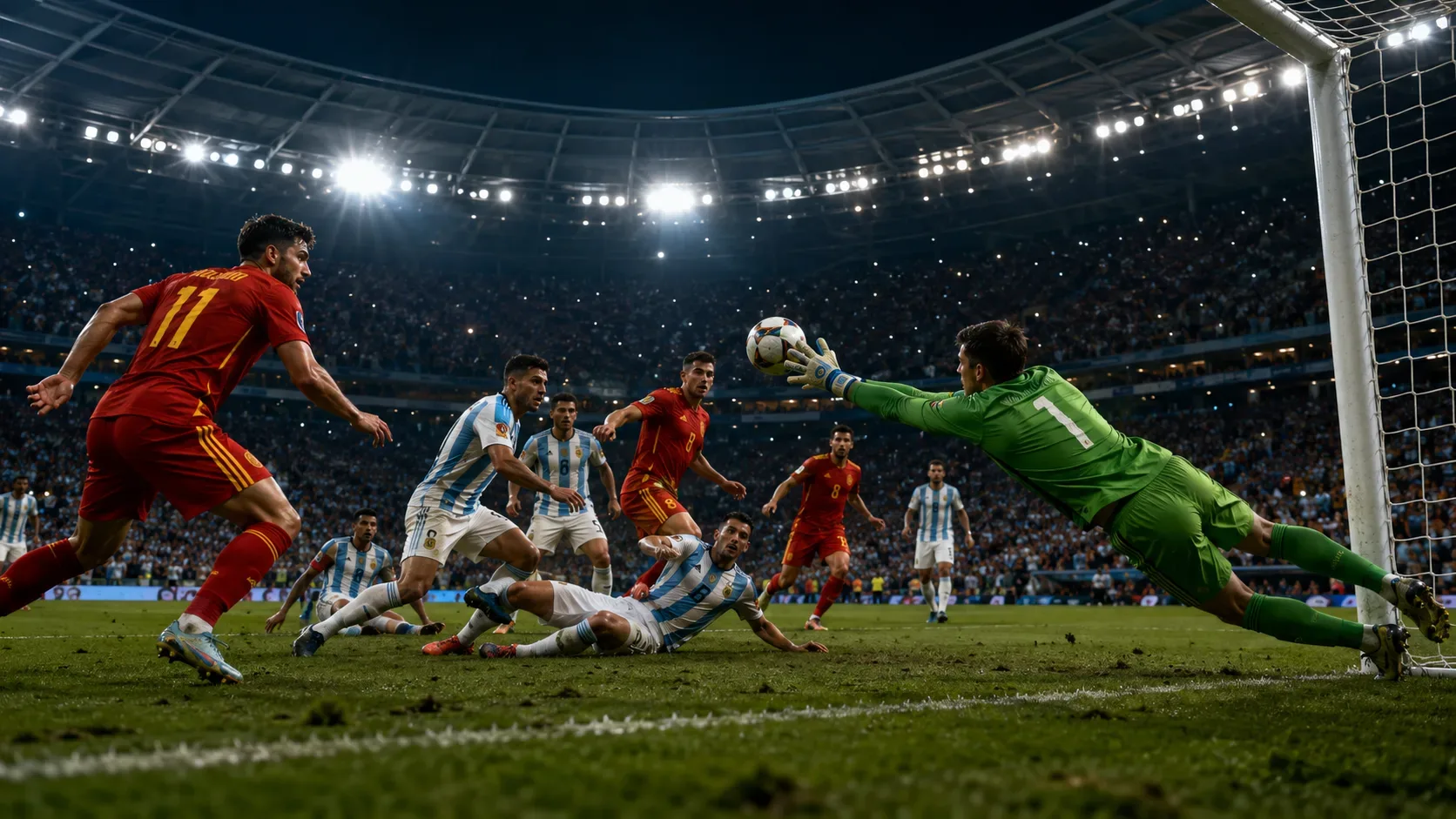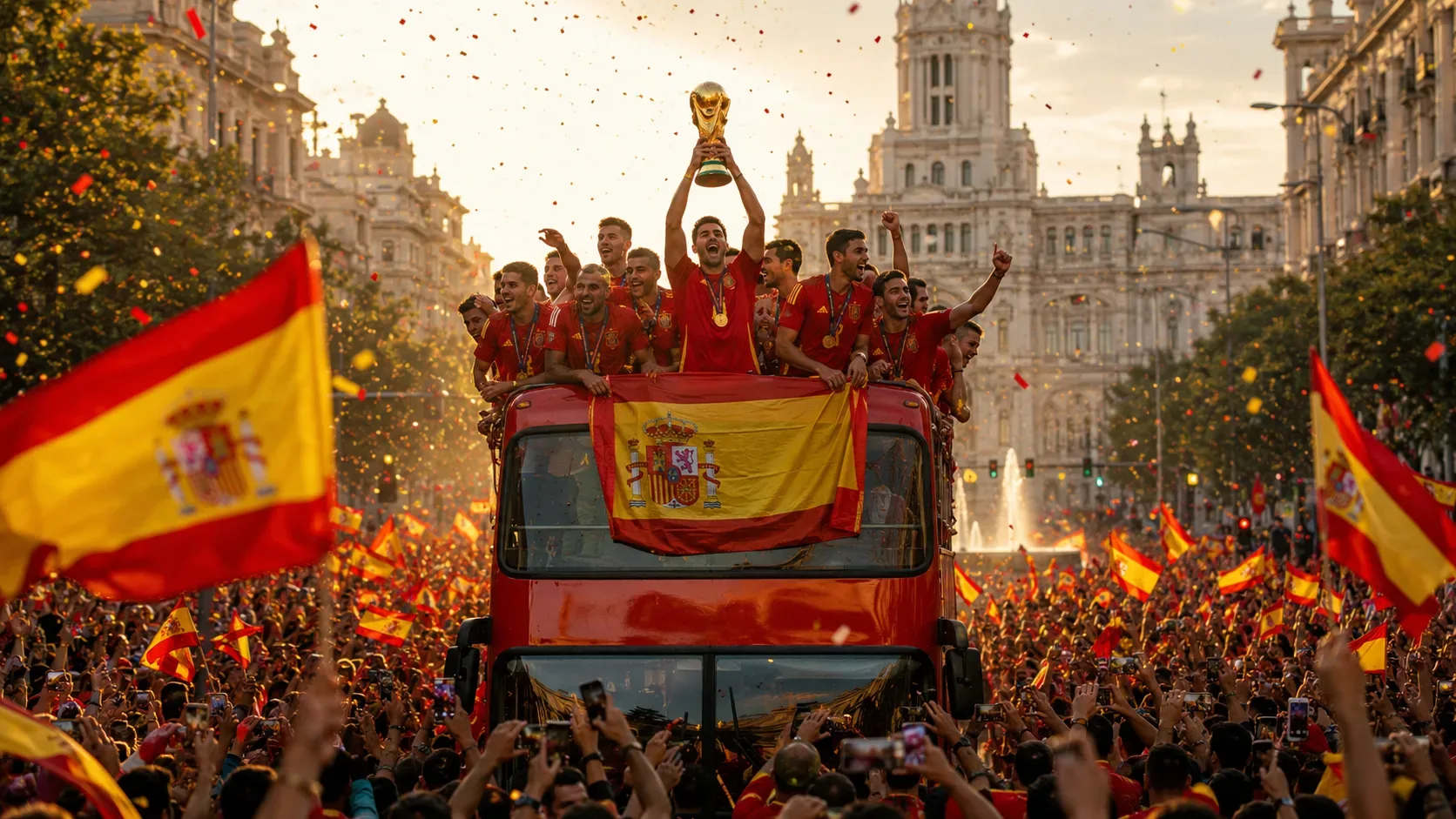
Spain needed 120 minutes to beat Argentina 1-0 in the 2026 World Cup final. To celebrate, however, the country seemed willing to go through the entire night. One day after the decision in New Jersey, the champions arrived in Madrid and found a capital full of flags, red shirts, music and a crowd eager to see the most desired trophy in football up close.
Spain's celebration after its second world championship was much more than a parade. It began with the return of the delegation, went through official receptions, transformed important Madrid avenues into improvised stands and ended in a great spectacle in the Plaza de Cibeles. Between protocol and relaxation, players, coaching staff and fans celebrated together the second star won 16 years after the 2010 title.
The cup arrived in Madrid in Rodri's hands
The Spanish team's plane landed at Adolfo Suárez Madrid-Barajas Airport on the afternoon of July 20. Captain Rodri, voted the best player of the World Cup, was the first to appear carrying the trophy, accompanied by coach Luis de la Fuente and the president of the Spanish Federation, Rafael Louzán.
The image helped set the tone for the celebration. The cup came to the forefront, as the protagonist of the day, while players still tired from the final began to realize the scale of what they had accomplished.
Before direct contact with the crowd, the delegation participated in institutional commitments. The champions were received by the Spanish royal family at the Zarzuela Palace and, later, by the president of the government, Pedro Sánchez, at the Moncloa Palace.
The moment was more formal, with speeches, photographs and tributes. Still, the feeling that would accompany the entire celebration was already present: that generation had gone from being just a promising team to definitively entering the history of Spanish football.
A sea of red took over the streets of the capital
After the official ceremonies, the protocol gave way to the popular celebration. Players and members of the coaching staff boarded an open bus to begin the parade through the streets of Madrid.
The vehicle carried messages alluding to the title and the team's unity, while the cup remained in a prominent position. On top of the bus, the athletes sang, danced, filmed the crowd and responded to the fans who occupied sidewalks, windows, balconies and elevated points along the route.
The delegation left the Moncloa region and traveled along roads such as Princesa, Alberto Aguilera, Carranza, Sagasta, Goya and Serrano. It also passed by Plaza de la Independencia and Puerta de Alcalá before heading towards Cibeles.
The authorities' estimate was between 1.8 million and two million people attending the celebration in Madrid. Even with temperatures approaching 35°C, many fans arrived hours early and remained on the streets until the champions passed by.
Red dominated the landscape. Team shirts, Spanish flags and replicas of the cup mixed with cell phones raised to register the bus passing. The avenues stopped functioning just as roads in the capital and became a huge open-air grandstand.
Dances and games revealed the most spontaneous side of the selection
The parade showed a very different team from the one that had faced the pressure of the final. Without the obligation to score, defend or control the result, players were able to enjoy the moment spontaneously.
Borja Iglesias took on the role of DJ during part of the celebration. Lamine Yamal and Nico Williams drew attention for their dances, while other athletes sang, played with each other and interacted with posters carried by fans.
Some players ditched part of their commemorative uniform to face the heat. Ferran Torres and Marcos Llorente, for example, appeared shirtless during the journey. Ferran, who scored the goal that decided the final, also received special attention from the fans.
These scenes helped bring the group even closer to the fans. During the World Cup, Spain had been recognized for its organization, its control of the games and its ability to compete under pressure. In Madrid, the other side of that team appeared: young, relaxed, noisy and completely dedicated to the celebration.
Cibeles became the big stage for the second championship
The Plaza de Cibeles began hosting presentations and activities even before the team arrived. Thousands of people gathered in front of the stage set up near the Communications Palace, waiting for the moment when the cup would be raised again.
When the players finally showed up, the celebration took on the form of a spectacle. Each champion was called individually to the stage, accompanied by a song chosen for their performance.
Ferran Torres entered to the sound of a song related to the nickname “Tubarão”. Mikel Oyarzabal chose a song associated with the team's recent celebrations, while Luis de la Fuente appeared to the sound of “Quijote”, by Julio Iglesias.
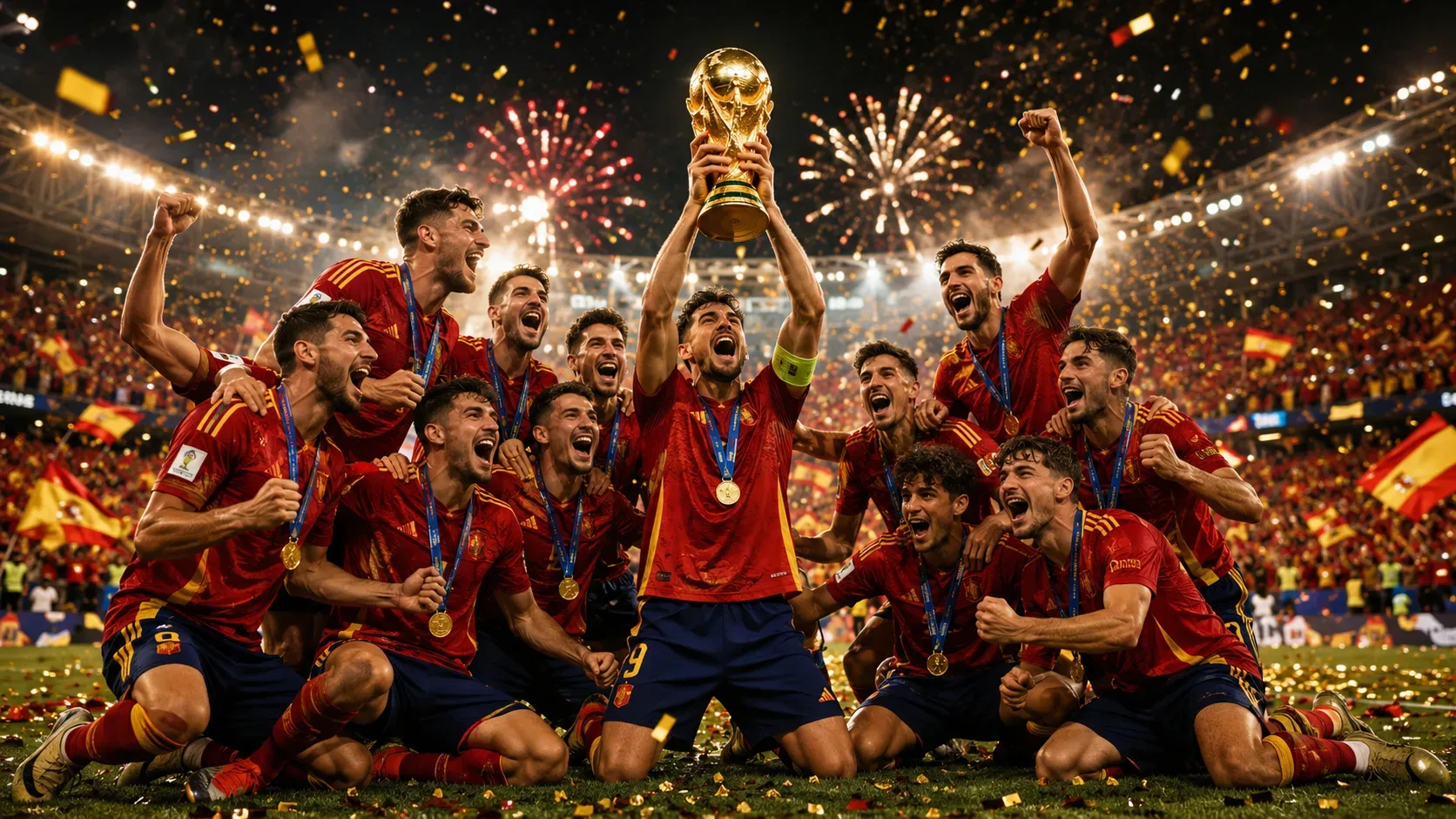
Rodri's entry was one of the most symbolic moments. The captain appeared carrying the trophy and passed through a corridor made up of his teammates. The cup, illuminated in the center of the stage, represented the final point of a campaign built with authority and ended in a difficult final against Argentina.
Luis de la Fuente was also celebrated by athletes. The coach was lifted and thrown into the air, in an image that summed up the relationship between the commander and a squad that managed to transform individual talent into collective strength.
Music became part of the memory of the conquest
The party in Cibeles featured performances by artists such as Aitana, Ana Mena and Lola Índigo, as well as bands and DJs who entertained the public during the wait and after the players arrived.
One of the most anticipated songs was “Superestrella”, performed by Aitana. The song had accompanied the team's trajectory during the tournament and ended up associated with Spanish victories, functioning as a kind of informal soundtrack to the campaign.
The moment brought together athletes and artists on the same stage. The players sang, danced and raised the trophy again in front of the crowd. There was no more tension, timer or opponent. All that remained was the celebration of an achievement that already belonged to the country's collective memory.
A new generation created its own memory
Comparisons with 2010 were inevitable. That year, Spain won its first World Cup with a generation marked by names like Iker Casillas, Xavi, Iniesta, David Villa and Sergio Ramos.
The 2026 selection, however, did not just try to repeat the past. The group led by Luis de la Fuente built its own identity, combining experience, youth, intensity and game control. Rodri became the second star captain, while players such as Lamine Yamal, Nico Williams, Gavi, Pedri and Ferran Torres went on to represent a new stage in Spanish history.
The celebration in Madrid symbolized this passage. Children who only knew the 2010 title from videos were able to watch a new generation taking the World Cup through the streets of the capital. For many adults, it was the opportunity to relive an emotion that seemed unique.
The second title also placed Spain in an unprecedented position: the country now simultaneously holds the men's world title in 2026 and the women's world title won in 2023.
The second star is no longer a dream
The party is over, but the image of the cup on the open bus, surrounded by a crowd dressed in red, will remain one of the great records of Spanish sport.
The celebration showed the scale of a world title. On the field, it is decided by details, tactical choices, defenses, goals and physical resistance. Outside of it, it transforms streets, brings generations together and creates memories that go beyond the players themselves.
Spain were champions in New Jersey, but it was in Madrid that they were able to fully understand the size of the achievement. In front of almost two million people, the team presented the cup to the country and transformed the second star into a popular celebration.
More than welcoming the champions, the fans were part of the celebration. For a few hours, players and the public stopped occupying different sides of the security barriers. Everyone seemed to belong to the same team.
Conclusion
Spain's celebration after winning the 2026 World Cup combined solemnity, emotion and relaxation. It began with the arrival of Rodri carrying the cup, went through the institutional tributes and reached its peak in the parade through the streets of Madrid and the show held in Cibeles.
The players' dances, the musical performances, the presence of millions of fans and the new lifting of the cup built a celebration worthy of the second championship. The generation of 2026 has not only added a second star to the Spanish shield: it has also created its own historical image, with an entire capital transformed into a grandstand.